

As a supplier of Canvas Relief Tents, I've witnessed firsthand the crucial role these tents play in various relief efforts. One of the most frequently asked questions about our Canvas Relief Tents is their heat - retention ability. In this blog, I'll delve into the science behind it, factors that influence it, and how it compares to other types of relief tents.
The Science of Heat Retention in Canvas Relief Tents
Canvas is a heavy - duty woven fabric, typically made from cotton or a cotton - polyester blend. The heat - retention ability of canvas is based on several physical properties. First, canvas has a relatively high specific heat capacity. Specific heat capacity is the amount of heat energy required to raise the temperature of a unit mass of a substance by one degree Celsius. A higher specific heat capacity means that the canvas can absorb more heat energy without a significant increase in temperature. This allows the tent to act as a thermal buffer, absorbing heat during the day and releasing it slowly at night.
Second, the dense weave of canvas creates small air pockets within the fabric. Air is a poor conductor of heat, which means it resists the transfer of heat. These air pockets act as insulation, reducing the rate at which heat can escape from the tent. When the outside temperature drops, the air pockets in the canvas help to keep the warm air inside the tent from quickly dissipating.
Factors Influencing the Heat - Retention Ability
Canvas Thickness
Thicker canvas generally has better heat - retention properties. A thicker fabric has more mass and more air pockets, which can store more heat and provide better insulation. Our Canvas Relief Tent comes in different thicknesses to meet the diverse needs of our customers. For colder climates, we recommend a thicker canvas option to ensure maximum heat retention.
Weather Conditions
The heat - retention ability of a Canvas Relief Tent is also affected by the external weather conditions. In windy conditions, the wind can disrupt the air pockets in the canvas, reducing its insulating effect. Additionally, if the outside temperature is extremely low for an extended period, the tent will gradually lose heat, although at a slower rate compared to other types of tents. On the other hand, in sunny and warm weather, the canvas can absorb a large amount of solar radiation, which can be beneficial at night but may make the tent too hot during the day. However, the high specific heat capacity of canvas helps to moderate the temperature inside the tent.

Tent Design
The design of the tent can significantly impact its heat - retention ability. Tents with a well - sealed entrance and fewer ventilation holes tend to retain heat better. However, proper ventilation is also important to prevent condensation and maintain air quality inside the tent. Our Canvas Relief Tents are designed with a balance in mind, featuring adjustable ventilation options that allow users to control the heat and air circulation according to the weather conditions.
Comparison with Other Types of Relief Tents
When compared to other types of relief tents, such as those made of nylon or polyethylene, Canvas Relief Tents generally have better heat - retention properties. Nylon and polyethylene tents are lightweight and more water - resistant, but they have lower specific heat capacities and less insulation. They tend to heat up quickly in the sun and cool down rapidly at night.
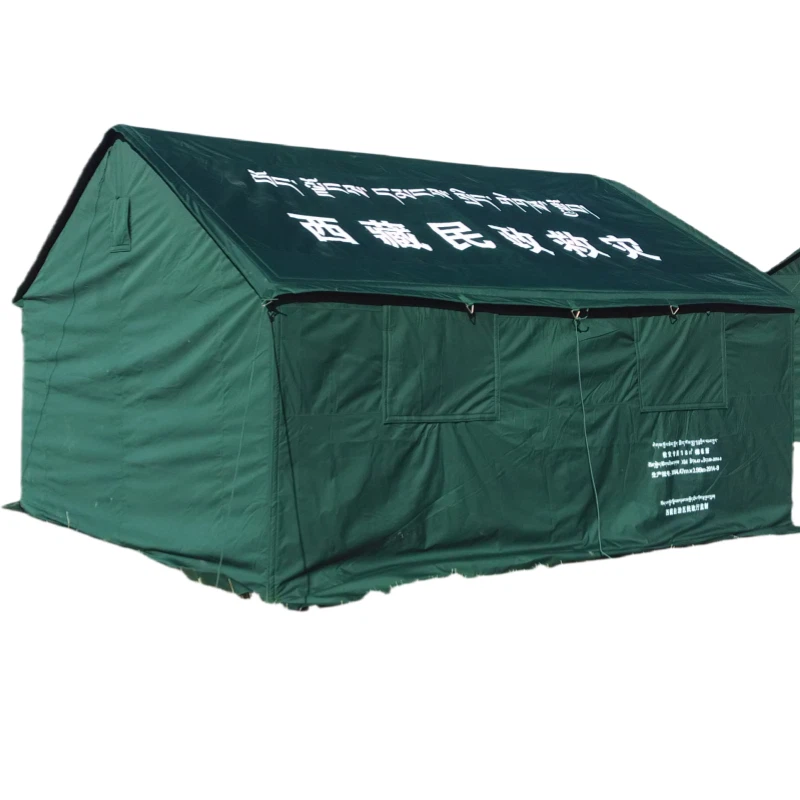
Refugee Tent House made of canvas provides a more stable and comfortable internal temperature for the occupants. In cold climates, the heat - retention ability of canvas can make a significant difference in the well - being of those seeking shelter. Similarly, in Disaster Relief Tent scenarios where people may be displaced for an extended period, the consistent temperature inside a Canvas Relief Tent can contribute to better health and recovery.
Real - World Applications
Canvas Relief Tents are widely used in refugee camps, disaster - stricken areas, and military operations. In refugee camps, the heat - retention ability of these tents is crucial for providing a warm and comfortable living environment, especially in regions with cold winters. For example, in some European countries that experience cold weather, refugee camps rely on Canvas Relief Tents to protect the displaced population from the harsh elements.
In disaster - relief situations, such as after an earthquake or a flood, people may be left without proper shelter. Our Canvas Relief Tents can be quickly deployed to provide a safe and warm place to stay. The heat - retention ability ensures that the survivors can rest and recover without being exposed to extreme temperature variations.
How to Maximize Heat Retention
To get the most out of the heat - retention ability of our Canvas Relief Tents, there are several steps that users can take. First, make sure the tent is properly set up and all seams are sealed. A well - pitched tent will have fewer gaps for heat to escape. Second, use additional insulation materials inside the tent, such as thick blankets or sleeping pads. These can further reduce heat loss through the floor and provide extra warmth. Third, limit the number of times the tent entrance is opened, especially in cold weather, to prevent warm air from escaping.
Conclusion
The heat - retention ability of our Canvas Relief Tents is a result of the unique physical properties of canvas, including its high specific heat capacity and the insulating effect of its air pockets. While factors such as canvas thickness, weather conditions, and tent design can influence this ability, our tents are designed to provide a stable and comfortable internal temperature in a variety of environments.
Compared to other types of relief tents, Canvas Relief Tents offer superior heat - retention, making them an ideal choice for refugee camps, disaster - relief efforts, and military operations. By following the tips on maximizing heat retention, users can ensure that they get the best performance from our tents.
If you're interested in learning more about our Canvas Relief Tents or would like to discuss a potential purchase, please feel free to reach out. We're committed to providing high - quality tents that meet your specific needs and contribute to successful relief operations.
References
- "Textile Science and Technology: Volume 1 - Fibre Science" by A. J. Hearle
- "Thermal Properties of Textiles" by R. H. Giles